

Selecting the best gas stove for your kitchen is crucial because it can either enhance your cooking experience or be a complete limitation. One of the most difficult choices people often make is a 3-burner gas stove vs. a 4-burner gas stove. Although there are multiple cooking zones for both types of stoves, the right choice will depend on the size of your kitchen, your cooking habits, and the cooking needs of your family. Knowing the answer to which is better, a 3-burner or 4-burner gas stove, will help in providing a solution for the long term. This guide will analyse the size, functionality, design, and usage of the two types of gas stoves, providing you with the information needed to make the right choice in your kitchen.
The Great Kitchen Debate: 3-Burner vs 4-Burner Gas Stove – Finding Your Perfect Cooking Companion
When it comes to upgrading your kitchen, choosing between a 3-burner and a 4-burner gas stove is more than just a numbers game; it’s about lifestyle, efficiency, and how you experience cooking every day. A 3-burner stove offers simplicity, space-saving design, and is ideal for those who prefer organised, moderate cooking. On the other hand, a 4-burner gas stove brings power, flexibility, and the ability to multitask effortlessly, making it perfect for larger families or those who enjoy preparing elaborate meals.
This decision often reflects your daily routine, whether you value minimalism and convenience or need speed and versatility during busy cooking hours. From compact kitchens to spacious modular setups, both options cater to different needs while enhancing functionality. Understanding your cooking habits, available space, and long-term requirements will help you choose the stove that truly complements your kitchen and transforms your cooking experience into something efficient, enjoyable, and seamless.
3-burner vs 4-burner Gas Stove: What You Need to Know
In a 3-burner vs 4-burner gas stove comparison, the first aspect to analyse is the number of burners, which also affects usability.
- 3-burner Gas Stove: Better for small and medium-sized families.
- 4-burner Gas Stove: Better for large families and people who cook often.
The right choice will depend on your cooking needs and frequency.
3-burner Gas Stove: Features & Benefits

Key Features:
- Compact design
- Adequate for moderate cooking
- Less counter space usage
Advantages:
- Simple to operate
- Budget-friendly
- Ideal for small kitchen spaces
Limitations:
- Peak hour cooking is limited
These are often considered to be the best gas stoves for daily use.
4-burner Gas Stove: Features & Benefits

Key Features:
- Enhanced cooking surface area
- Prep multiple dishes at once
- Contemporary & upscale appearance
Advantages:
- Time saving during extensive cooking
- Perfect for large families
- Excellent for hosting
Limitations:
- More space is required
- Price is a bit higher
They are frequently mentioned among the best gas stoves for kitchens with higher usage.
3-burner vs 4-burner: Key Comparison Table
| Feature | 3 Burner Gas Stove | 4 Burner Gas Stove |
|---|---|---|
| Space Requirement | Compact | Larger |
| Cooking Capacity | Moderate | High |
| Ideal For | Small families | Large families |
| Cost | Affordable | Higher |
| Efficiency | Good | Excellent |
This table presents key differences to consider between the 3-burner and 4-burner.
3-burner Gas Stove Dimensions
Usual 3-burner gas stove dimensions:
- Width: 60–70 cm
- Depth: 35–45 cm
Smaller dimensions are ideal for tight kitchens where available surface area is limited.
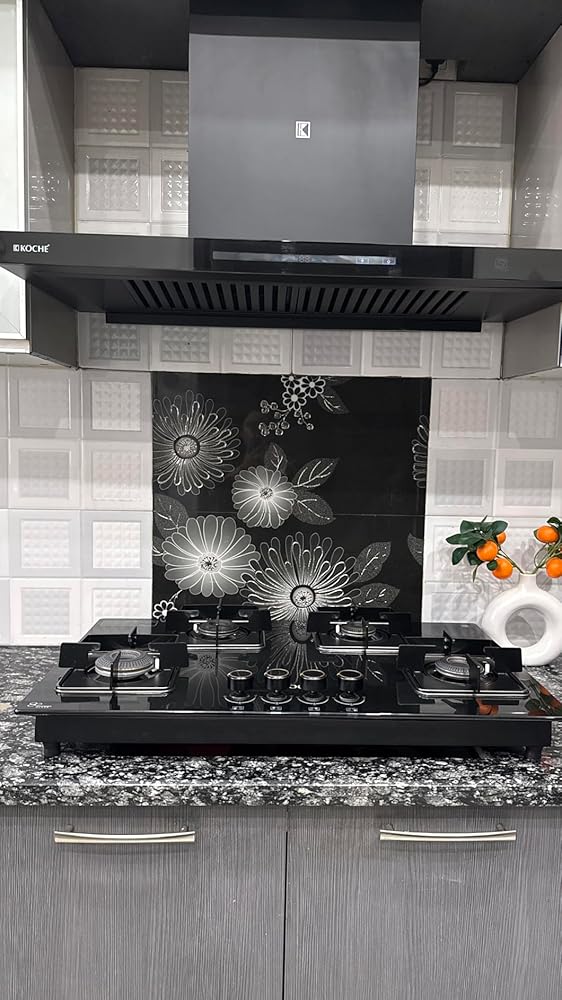
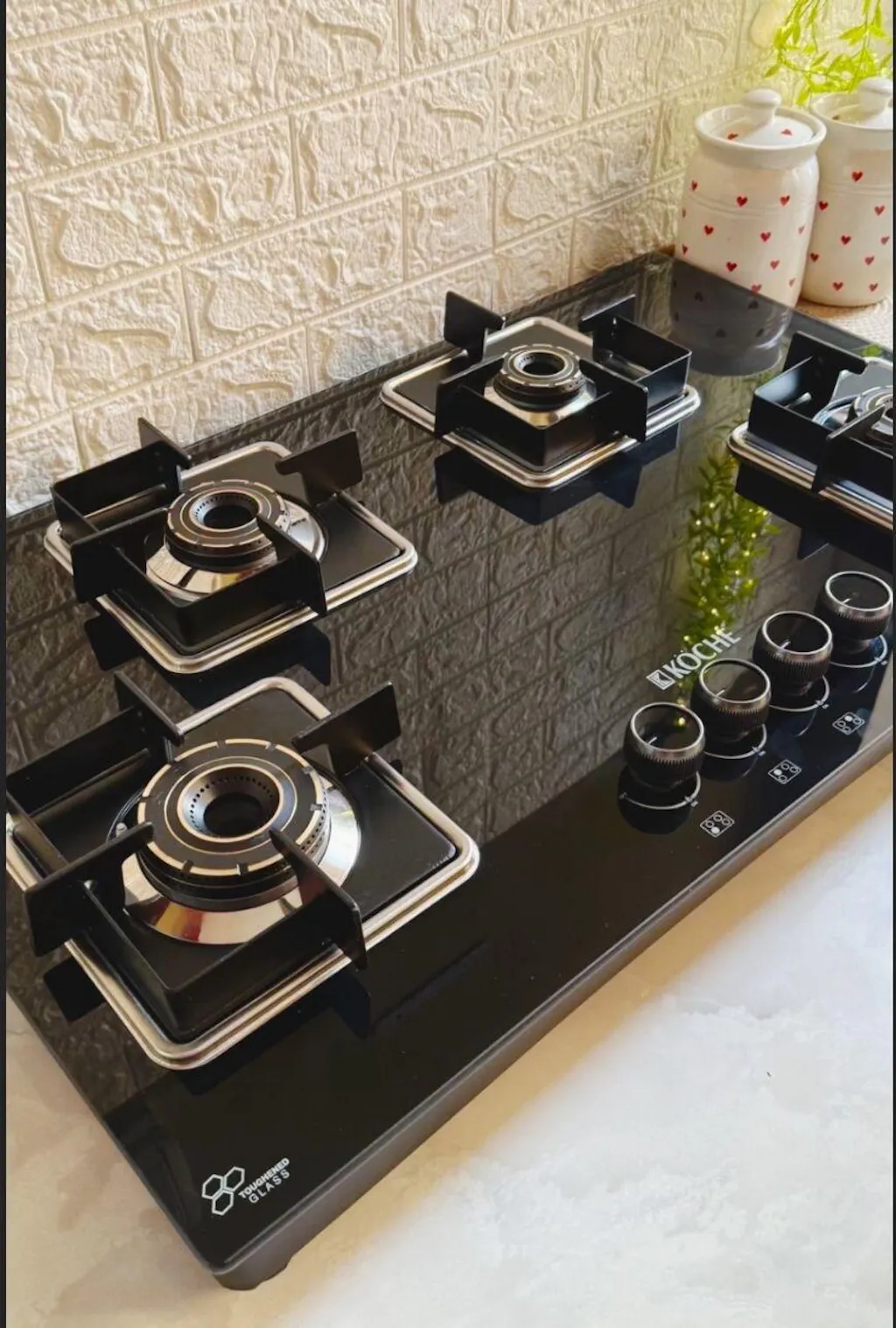
4-burner Gas Stove Dimensions
Typical 4-burner gas stove dimensions:
- Width: 60–90 cm
- Depth: 45–60 cm
The larger dimensions mean more clearance for installation but also allow for better multitasking.
3-Burner vs 4-Burner Gas Stove: Which One Truly Fits Your Cooking Style?
When thinking about which is better, a 3-burner or 4-burner gas stove, here are some things to consider:
Select 3-burner If:
- You have restricted space in your kitchen
- You do light cooking
- You want a cheaper option
Select 4-burner If:
- You need to cook more than 3 dishes at once
- You have a big family
- You want more efficiency
The best option will depend on your cooking habits and your kitchen design.
3-Burner vs. 4-Burner Gas Stove Vastu Guidelines
Some thoughts on the 3-burner vs 4-burner gas stove Vastu principles:
- Keep the stove in the southeast
- Ensure the burners are positioned to promote ease of use
- Don’t put the stove under a window
3 and 4-burner stoves are okay as long as the placement is done correctly.
Best 3 & 4-burner Gas Stoves: What to Look For
While choosing the best 3-burner gas stoves, you should consider the following:
- Build quality
- Burner spacing
- Burner cleaning
- Safety
- Good pan support
- Good flame visibility
- Premium Glass
- Good Streamlined Design
Best Hob for Kitchen: Built-in vs Freestanding
Considering the alternatives, the best hob for kitchen could be a built-in solution
Advantages of Built-in Hob:
- Sleek modern design
- Integrated easily with the countertops
- Better Looks
Advantages of Freestanding Stove:
- Moveable
- Simple to set up
- Better Value
It depends on the kitchen layout and the money available
Factors to Consider Before Buying
- Kitchen Size: The stove should fit well without being crowded.
- Cooking Habits: If you cook often, you need more burners.
- Budget: Consider the features you need with the price you can afford.
- Safety Features: Look for a flame failure system and a solid construction.
About the Köche Gas Stoves
Köche gas stoves are made with performance, strength, and modern design in mind. With great construction and efficient burner technology, Köche is a valued gas stove supplier. With a great selection to choose from, there are 3 and 4-burner options available to meet varying cooking requirements. Our stoves are built with high-quality materials for long-lasting durability and easy maintenance, while delivering up to 68% thermal efficiency. Köche produces great stoves, whether you are looking to buy the best 3-burner gas stoves or looking to upgrade to the highly rated best 4-burner gas stoves. The performance and overall experience in the kitchen are undeniable.
Common Mistakes to Avoid
- Not measuring the space before stove selection
- Not considering cooking habits
- Not considering safety features
- Selecting a stove based primarily on cost
These common mistakes make deciding on a 3-burner vs 4-burner gas stove easier.
Also Read: Key Factors to Consider Before Buying a 2-Burner Gas Stove in 2026
Conclusion
When you are trying to decide between a 3-burner vs. a 4-burner gas stove, you must always consider your cooking needs, the space available in your kitchen, and your lifestyle. 4-burner stoves are better for bigger families, and a 3-burner stove is great for your everyday cooking, as it takes up less space in the kitchen. The discussion of which is better, a 3-burner or a 4-burner gas stove, is ultimately determined by your daily cooking habits in combination with the space you have.
With the right combination of dimensions, budget, and design, you can select the best options that increase the kitchen's utility. Be it a freestanding cooker or the best hob for the kitchen, the right selection of kitchen appliances will make cooking more convenient and pleasant.
FAQs
Does burner spacing differ between 3-burner and 4-burner gas stoves?
Yes, burner spacing is typically more compact in 4-burner stoves, which can sometimes make it difficult to use large utensils simultaneously. In contrast, 3-burner stoves often provide more spacing between burners, offering better convenience when cooking with bigger pots or pans.
Are 4-burner gas stoves suitable for small kitchens?
While 4-burner stoves offer higher cooking capacity, they may feel cramped in smaller kitchens. Proper counter space and ventilation are essential to ensure ease of use. For compact kitchens, a 3-burner option is often more practical and comfortable for everyday cooking needs.
Do both stoves consume the same amount of gas?
Gas consumption depends on usage rather than the number of burners. A 4-burner stove may use more gas if multiple burners are used frequently, whereas a 3-burner stove can be more efficient for controlled, moderate cooking habits.
Is installation different for 3-burner and 4-burner gas stoves?
Installation requirements are generally similar, but 4-burner stoves may need a larger countertop area and proper alignment with the gas pipeline. Ensuring sufficient space and safe placement is important for both options to function effectively.
Can I upgrade from a 3-burner to a 4-burner stove easily?
Yes, upgrading is possible, but you must check available kitchen space, gas connection compatibility, and countertop dimensions. Planning these aspects beforehand ensures a smooth transition without affecting kitchen layout or functionality.

Share:
How to Clean Your Kitchen Chimney at Home: Step-by-Step Guide
Health Benefits of Using a Kitchen Chimney While Cooking