
Picking a chimney isn’t as simple as it sounds. Everything either looks too bulky or too fancy to be practical. And if you’ve already spent time setting up your kitchen nicely, the last thing you want is some loud, shiny box messing up the whole vibe.
The truth is that a good kitchen chimney design isn’t just about looks or just about performance. It’s somewhere in between. In an Indian kitchen, it has to deal with proper cooking oil, smoke, and tadka while still looking like it belongs there.
These days, people are moving towards cleaner setups. Less clutter, more blending. A modern kitchen chimney design is supposed to feel like part of the kitchen, not something added later.
Key Takeaways
- Choose a kitchen chimney design that fits your kitchen layout, not just the look.
- Built-in and slant models work better in smaller spaces.
- Don’t ignore the kitchen chimney outlet design; it affects performance directly.
- Darker finishes are easier to maintain.
- Keep the design simple, so it blends naturally.
- A good kitchen chimney interior design should feel effortless.
Trending Kitchen Chimney Design Ideas
Chimneys used to look very industrial. Now they’re more subtle. Or at least trying to be.
What people are actually choosing
- Wall-mounted T-shape: This is the usual one you’ll see in most homes. Straight, simple, does the job. It doesn’t try too hard, which is probably why it works in almost every home kitchen chimney design.
- Slant chimneys: These have picked up a lot lately. Slight angle, so you don’t keep hitting your head while cooking. Also looks a bit more modern without being too flashy.
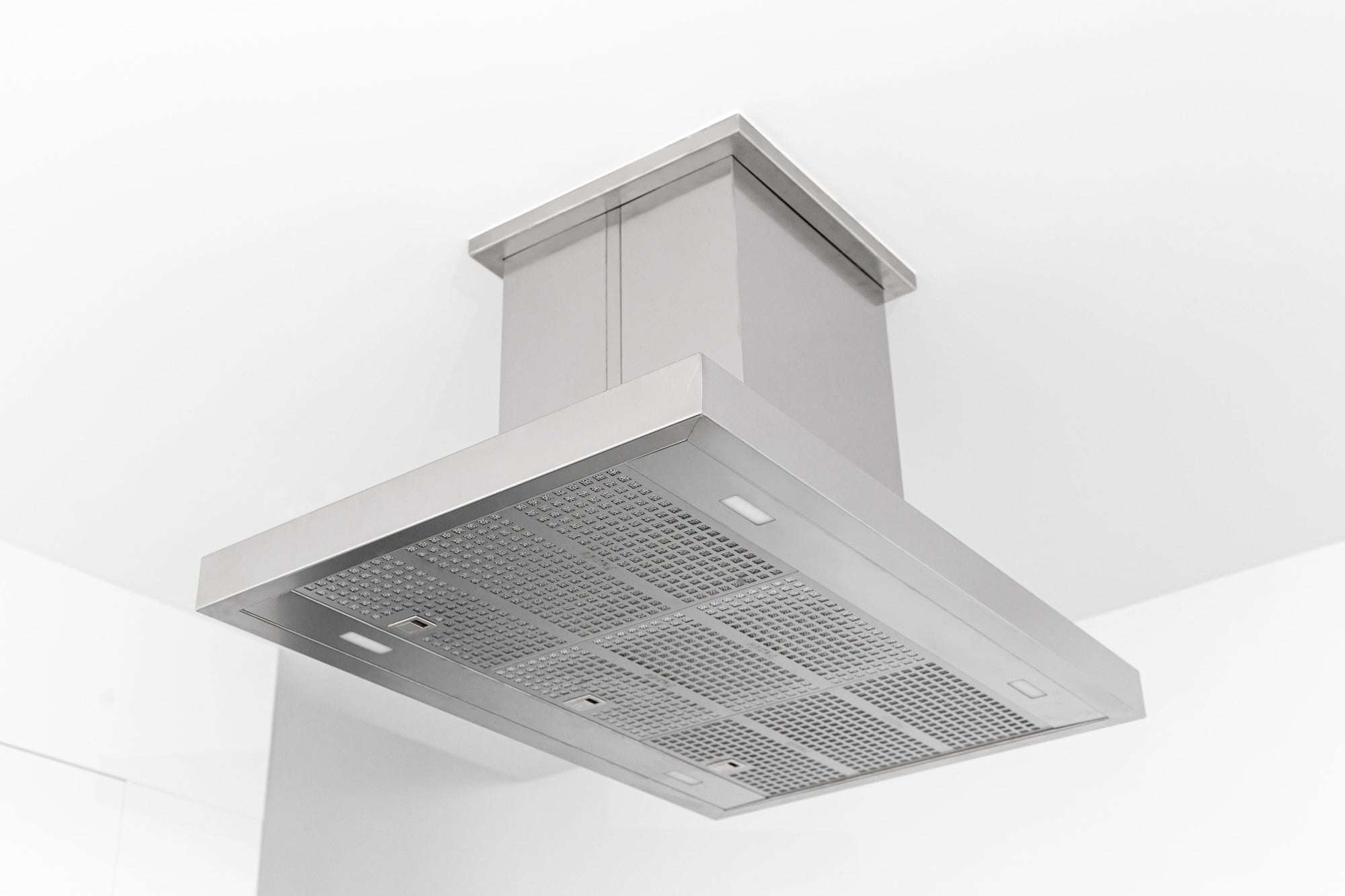
- Island chimneys: If your stove is in the middle, then this is what you go for. It hangs from the ceiling and becomes a proper part of your kitchen chimney interior design. It looks good, but you need space for it.
- Curved glass: Not as common as the others, but still around. Feels lighter visually and easier to clean since there aren’t too many edges.
Chimney Design for Small Kitchens
Small kitchens are tricky. Even one wrong appliance can make the space feel tight.
- Built-in chimneys: These go inside the cabinet, so you don’t really see them much. Probably the best chimney design for small kitchen setups if you don’t want things to look crowded.
- Slim slant models: Since they don’t come out too much, they keep some breathing space in front of the stove.
- Simple finishes: Dark colors or matte finishes blend better. Shiny steel sometimes stands out more than you want in a small space.
In smaller kitchens, the goal is simple: to keep things low-key so the space doesn’t feel packed.
Kitchen Chimney Interior Design: Getting the Look Right
A chimney can either match your kitchen or completely ruin the look. There’s usually no in-between.
Small details that actually matter
- Color matching: If your kitchen has darker tones, a black chimney usually fits better. Also, it hides stains better, which is honestly useful.
- Hiding the pipe: This is where many kitchens go wrong: a visible pipe makes the space look unfinished. You can avoid this by placing your chimney inside cabinets or choosing a ductless model.
- Lighting: Built-in lights are helpful, but too bright can feel harsh. Something soft works better while cooking.
A good kitchen chimney interior design doesn’t stand out too much. It just fits.
Practical Side: Kitchen Chimney Outlet Design
This part gets ignored a lot. But it actually affects how well the chimney works.
Basic things that make a difference
- Short pipe is better: The longer the pipe, the more the suction drops. Simple logic.
- Fewer bends: Every turn slows down airflow and adds noise.
- Outside cover: Helps keep dust and birds out. Small thing, but useful.
- Neat finishing: Cover the pipe properly so it doesn’t look like an afterthought.
A good kitchen chimney outlet design is not about looks; it’s about making sure the chimney actually works the way it should.
Why Köche Fits into Modern Kitchens
Most people don’t want their chimney to be the highlight of the kitchen—they just want it to work well without being annoying. At Köche, the idea is simple: keep things practical. Slim designs, minimal noise, and finishes that blend in effortlessly. Powered by a BLDC motor, the chimney delivers quiet operation, with noise levels as low as 42 dB at speed 1. And with a heat auto-clean & filter-less design, maintenance becomes easy—so your chimney keeps looking good for years. Especially for Indian cooking, where things get messy fast, it helps when the design doesn’t make cleaning harder. A balanced modern kitchen chimney design isn’t about doing too much, it’s about getting the basics right.
Also Read: Kitchen Hob Buying Guide: How to Choose the Perfect One
Summary
Choosing a chimney is mostly about getting the balance right. You want something that looks okay in your kitchen but also handles actual cooking, not just light use.
Whether you’re going through different kitchen chimney design ideas or trying to find a practical chimney design for small kitchen, focus on how it fits your space and how the airflow is set up.
At the end of the day, a good chimney just does its job quietly. You don’t really notice it, and that’s kind of the point.
FAQs
Which chimney size is enough for a normal kitchen?
Usually, 60 cm works for 2–3 burner stoves. Just make sure it covers the full stove width.
How do people hide the chimney pipe?
Most use a cabinet or a box that matches the kitchen. Makes everything look cleaner.
Can a chimney work without a window?
Yes, as long as there’s proper ducting to an outside wall.
Are glass chimneys difficult to clean?
Not really. They just need regular wiping so grease doesn’t build up.
What height should the chimney be installed at?
Around 24–30 inches above the stove. That’s where it works best.

Share:
How to Keep Your Gas Stove Clean? Safety & Maintenance Tips
Which Type of Kitchen Chimney is Best for Indian Home?