
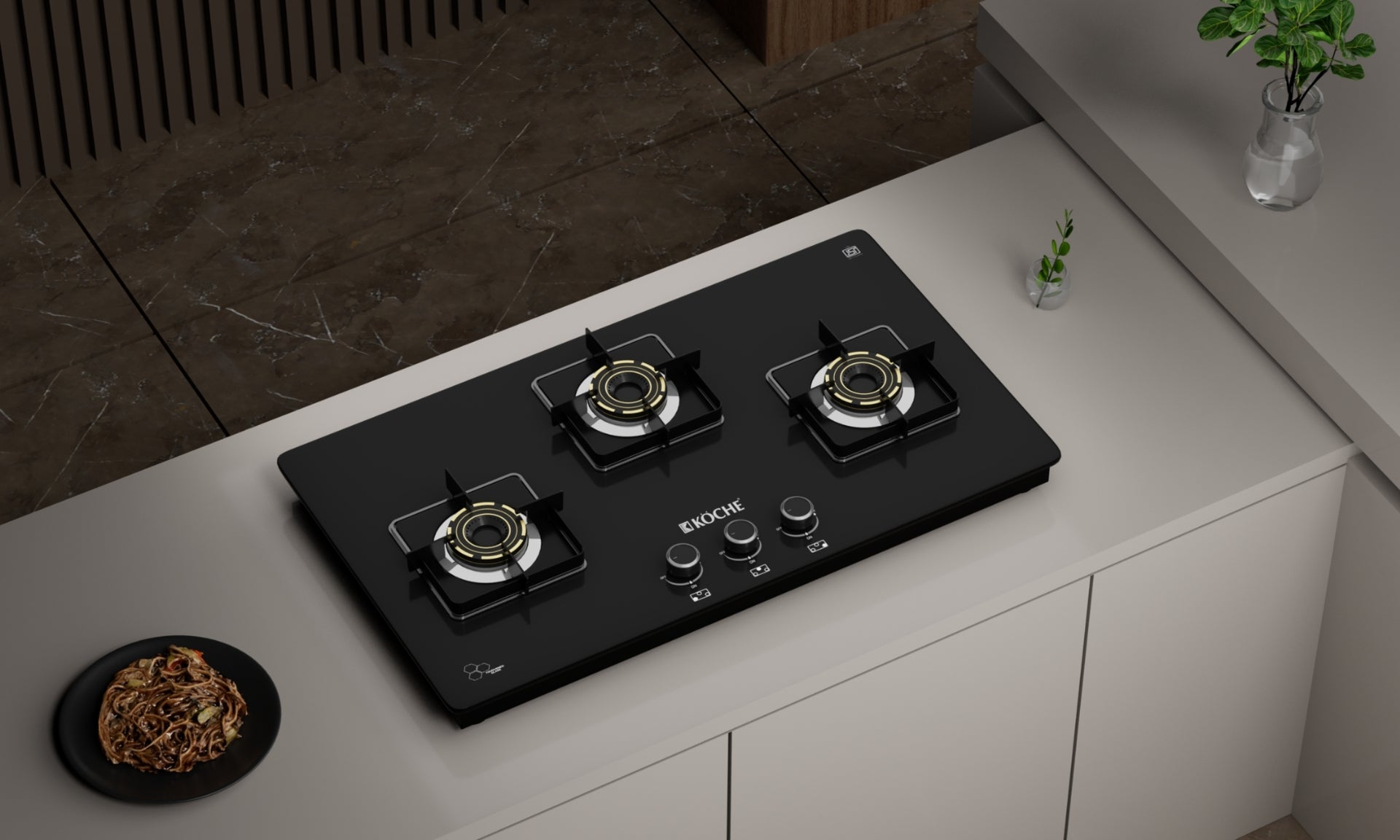
A cooktop is a huge consideration when designing or remodelling a kitchen. With a myriad of choices available to them, many homeowners wonder, what type of cooktop is the most energy efficient and allows for the most versatility and cooking customisation? To answer this question, one needs to understand what a cooktop is, how cooktops function, and how the various models' power and fuel consumption are structured. You should check Köche cooktops if you are looking for ergonomics and safety in one go. Explore our entire range of cooktops that combine performance with modern design.
In modern kitchens, the accessibility and functionality of the kitchen appliances are centred around ergonomics and safety, but the need for power and precision adds additional layers to all cooktop selections. The energy consumption for the various types of cooktops is also addressed in this energy efficiency guide to help you locate the most energy-efficient cooktop.
What is a Cooktop?

Before looking at the various energy consumption models, it is critical to understand what a cooktop is. A cooktop is a cooking appliance that is countertop-mounted and uses either gas, electricity or induction to create cooking heat.
Cooktops have become a staple in modular kitchens for the following reasons:
- Space-saving
- Easy to move
- Surface cleaning is a breeze
Their small size allows for use in spacious houses as well as small flats.
Current Options for Cooktops
Knowing the options for cooktops helps make a better decision. They are categorized as follows:
1. Gas Cooktop
A gas cooktop can use either natural gas or LPG to create an open flame. The ability to provide instant heat and allow for open flame cooking is the reason traditional cooks prefer this type of cooktop.
Pros:
- Open flame cooking is versatile and can bring about instant changes in heat
- Works even if there is a blackout
- Operating costs are cheaper in some parts of the world
Cons:
- Needs to have a smoke vent
2. Electric Coil Cooktop
These use metal coils that heat up to cook food. They are cheap but not the most energy-efficient option.
Pros:
- Less cost to purchase
- Maintenance is less to deal with
Cons:
- Slow to bring about cooking
- Use of energy can be higher in a household
3. Ceramic or Radiant Cooktop
These use glass that is smooth on top and has wires under that serve as heating elements.
Pros:
- Appeals to a modern aesthetic
- Low cleaning effort required
Cons:
- Slower heat times
- Holds heat longer than required
4. Induction Cooktops
Induction cooktops utilize electromagnetic energy to heat the pots and pans instead of heating the cooking surface.
Pros:
- Heating times are incredibly fast
- Negligible heat loss
- Rational energy usage
Cons:
- Certain pots and pans are required to cook
- No operation during power outages
Induction cooktops are considered to be the most energy efficient cooktop available.
Energy Efficiency Comparison
In order to determine which cooktop is the energy-efficient cooktop of the four described, we will look at the mechanics of heat transfer for each.
- Efficiency of a Gas Cooktop: Gas cooktops lose a lot of heat at around 40 to 55 per cent. Most of the heat escapes around the pan.
- Efficiency of an Electric Coil Cooktop: Electric coil cooktops have an efficiency of 65 to 70 per cent, but take a longer heating and cooling time.
- Efficiency of a Ceramic Cooktop: Ceramic cooktops lose energy even though they are slightly better than coils at heating up the cooking surface.
- Efficiency of an Induction Cooktop: Induction cooktops heat right to the cooking pot or pan, which gives them the ability to have up to 85 to 90 per cent efficiency.
Induction cooktops are considered to be the most energy efficient cooktop for home use.
Which Cooktop Suits You Best?
Most homeowners want to know which cooktop is best: induction or gas? It depends on your cooking preferences and style.
Opt for a gas cooktop if:
- You want to be able to control visible flames.
- You use cooking methods like flame roasting.
- You want greater control over cooking.
- You live somewhere where the power goes out regularly.
Opt for induction if:
- You want the most energy savings.
- You want cooking to be as quick as possible.
- You want to be able to eliminate the most cooking-related dangers.
It is about finding the best combination of your cooking style, your budget, and efficiency.
Cooktop Dimensions and Space Planning
Cooktop dimensions must be your first consideration before installation:
- 60 cm (2-3 Burners)
- 75 cm (3- 4 Burners)
- 90 cm (4- 5 Burners)
Your cooktop dimensions will tell you how to fit your countertop towards the ventilation areas.
Cooktop Installation
How to install a cooktop safely refers to how properly it will be done, as well as how the cooktop will be safely used.
Basic Installation Guide:
- Measure your countertop to fit.
- Ensure a gas/electrical connection.
- Provide clearance for ventilation.
- Seal the edges to stop spills from getting out.
Connections should be managed by certified technicians for gas models. As for induction, ensure the wiring is capable of the required wattage. This way, you will install something that will be functional for a long time.
Safety
Additional to energy efficiency, modern cooktops also have various safety features such as:
- Gas models have flame failure protection
- Induction models have auto-shut off features.
- Ceramic cooktops have heat indicators.
Induction cooktops also have the benefits of a lower burn risk due to the fact that they remain cool to the touch. This makes them more suited for homes with children than the other types of cooktops.
Impact on The Planet
When it comes to the environment, induction technology is the best as it has lower emissions than the burning of gas. This means that if you want to reduce your carbon footprint, induction models become the best option for eco-friendly living.
In areas where the burning of gas for electricity is the primary source of energy, the environmental impact of gas cooktops and induction cooktops becomes the same.
Cleaning and Durability
Regular cleaning of the burners is required for gas cooktops. The surfaces of induction and ceramic cooktops are also easily damaged if they are not cleaned properly.
Long-term durability depends on the quality of materials and usage.
Practical Cooking Performance
While professional chefs prefer gas due to instant heat control, induction provides significant advantages in speed and heat control.
For practical everyday cooking, the most energy-efficient cooktop may not be the top choice, as it often relates to comfort and familiarity.
Final Verdict: Which Is the Most Energy-Efficient?
For modern homes, induction cooktops are considered the most energy efficient cooktop due to minimal heat loss, faster cooking times, and improved safety. On the other hand, high-quality gas cooktops paired with efficient gas burners may also deliver consistent reliability and low operational costs in a significant number of households.
Ultimately, the best choice comes from a blend of your specific cooking patterns, the price of fuel in your area, and the setup of your kitchen.
Köche Cooktop: Innovative & Modern Cooking Solution
Köche cooktops deliver an innovative combination of safety, reliability, and performance to fit within energy-conscious designs. Köche models are built to fit into modular kitchens and come with highly efficient burners, toughened glass, and advanced flame control mechanisms. Köche cooktops ensure your daily cooking and fuel usage optimisation is made simple. Cooktops offer quality materials and modern design, making them a great option for contemporary homes with the aim of utilising better cooking solutions.
Also Read: Kitchen Hob Buying Guide: How to Choose the Perfect One
Conclusion
When choosing the right cooktop, aesthetics may be the least important factor compared to understanding what a cooktop is, assessing the different types of cooktops, understanding cooktop dimensions, and knowing how to install a cooktop. If saving energy is the primary focus, induction cooktops are a clear choice for the most energy-efficient cooktop due to their innovative heat transfer technology. On the other hand, a well-designed gas cooktop is great for performance and affordability in a variety of homes.
In the end, making the choice of which cooktop is best is all about your fuel habits, kitchen design, and energy goals. By utilising the right cooktop, you will improve safety and spend less, all while adding to your experience with an energy-efficient cooktop.
FAQ About Cooktop
Q1. Does cookware material affect cooktop energy efficiency?
Ans: Yes, The material of your cookware plays a major role in performance. Flat-bottomed stainless steel or cast iron pans improve heat transfer, especially on induction and ceramic surfaces. Warped or uneven cookware reduces efficiency and increases cooking time.
Q2. Can voltage fluctuations impact induction cooktop performance?
Ans: Yes, Induction models require a stable electrical supply. Frequent voltage fluctuations may affect heating consistency or trigger safety shut-offs. Installing a voltage stabiliser can help maintain optimal performance and extend appliance lifespan.
Q3. Are dual-fuel kitchens a practical solution for energy savings?
Ans: Some households combine a gas cooktop with an induction unit. This hybrid setup allows users to choose the most energy-efficient option depending on the dish, offering flexibility and better overall energy management.
Q4. How does altitude affect cooktop efficiency?
Ans: At higher altitudes, gas cooktops may burn less efficiently due to lower oxygen levels, which can impact flame performance. Induction cooktops are unaffected by altitude, making them more consistent in such regions.
Q5. Do smart cooktops with timers and sensors reduce energy consumption?
Ans: Yes. Cooktops equipped with automatic shut-off, pan detection, and programmable timers prevent unnecessary energy usage. These smart features improve cooking precision while lowering overall power or fuel waste.
Share:
Common Mistakes to Avoid When Buying a Built-in Hob
What is the difference between a Hob and a Gas Stove?