
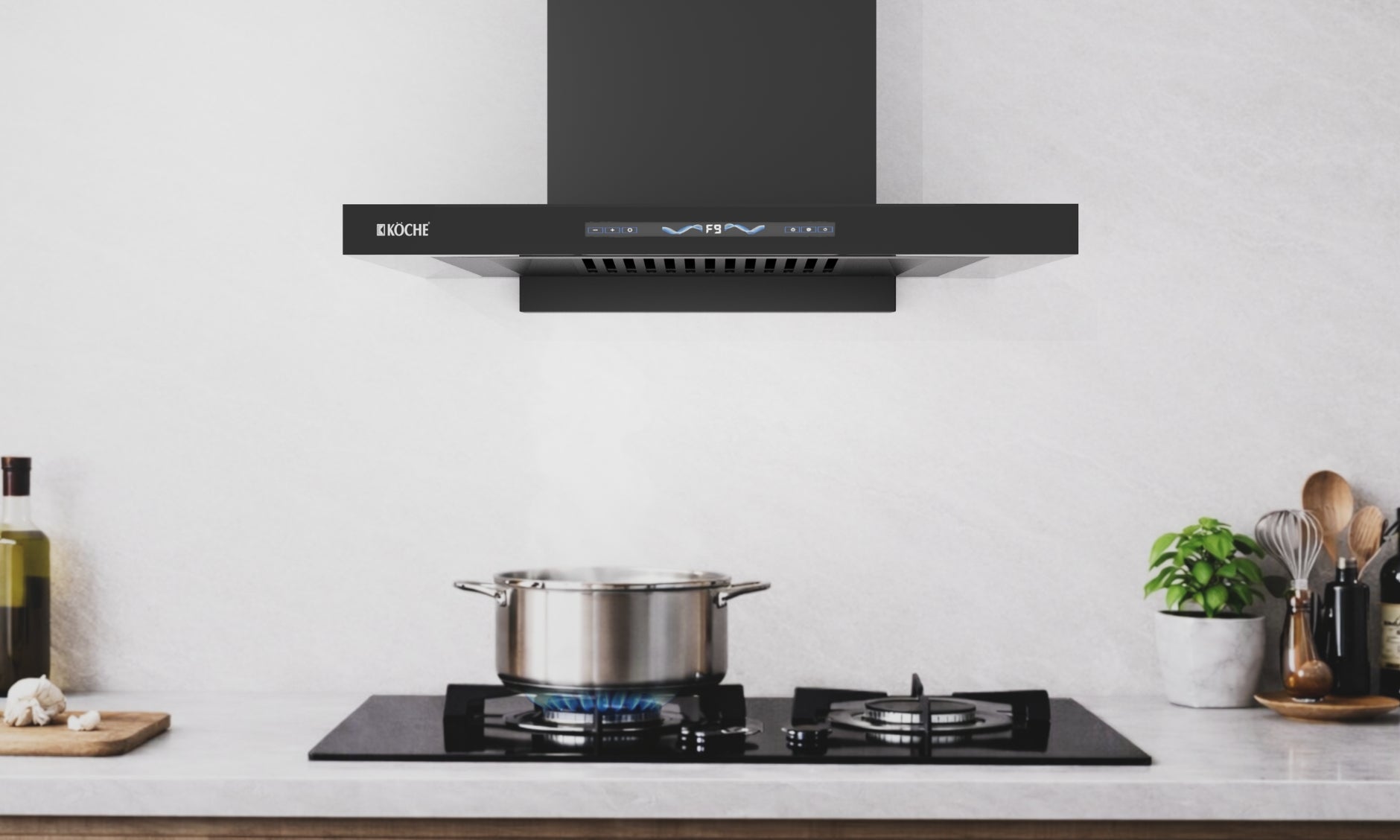
In most modern homes, kitchen chimneys have become a vital component, and especially in Indian homes where there is a lot of frying, grilling and smoky tempering, the need is ever more. From the early models that relied on mesh and baffle filters, chimney technology has evolved significantly. Today, we have technologically advanced filterless chimney systems designed for greater convenience and performance. Most homeowners have the question, what is a filterless chimney? How does it work? What are the maintenance hassles? Do these really promote convenience and powerful suction?
Along with the reasons and convenience that are pretty clear, there are both pros and cons to weigh in on. This is a filterless chimney pros and cons guide, along with how a filterless chimney works, to answer which chimney is best, filter or filterless?
What is a Filterless Chimney?
A filterless chimney is a kitchen chimney that doesn't use the traditional filter system that most do, so no mesh or baffle filters are present. It uses cutting-edge technology that uses airflow and centrifugal motion to separate the grease from the vapours, eliminating the need for physical filters.
The traditional filters in the chimney capture grease and need to be replaced, cleaned and repaired often. A filterless chimney uses airflow technology to minimise contact and clogging of parts of the chimney system.
Chimneys Without Filters Are Convenient:
- Low Maintenance
- More Powerful Suction
- Smoke Circulates Better
- More Compact
However, to fully appreciate the benefits, it is important to understand how it all works.
How Does a Filterless Chimney Work?
Most customers ask, how does a filterless chimney work? Filterless chimney systems work differently from filter ones. A filterless chimney system uses a more powerful motor and a specific stalk design to work.
Here's how it works:
- Powerful suction draws in smoke and vapour.
- Centrifugal motion separates oil from air.
- Separated oil collects in a dedicated oil tray.
- Clean air is either expelled outside (ducted) or recirculated indoors after purification (ductless).
- Auto-clean technology removes internal grease and directs it into the oil collection tray.
Because there are no mesh or baffle filters that impede the flow of air, suction power remains steady. This technology is particularly beneficial in kitchens where frying or cooking over high heat is a regular occurrence.
Knowing how a filterless chimney works clarifies the reason many homeowners choose it for kitchens that endure heavy cooking.
Filterless Chimney Advantages and Disadvantages
In order to conclude, we will look at the detailed filterless chimney pros and cons.
Pros of Filterless Chimney
1. Little Cleaning Required
One of the biggest advantages of a filterless chimney is its low maintenance requirement. Unlike traditional filter-based chimneys, where grease builds up and requires frequent cleaning, a filterless chimney only needs the oil collection tray to be cleaned periodically.
This is a huge benefit for the busy households.
2. Uniform Pulling Ability
Since there are no filters blocking airflow, filterless chimneys maintain a consistent and powerful suction over time. In models that use filters, clogged filters can reduce the system’s efficiency and airflow.
This makes filterless chimneys especially suitable for cooking styles that involve frequent deep frying and grilling.
3. Best for Indian Cooking
Indian kitchens generate a lot of smoke due to spices and tadka. Filterless chimney's high suction power makes it more smoke effective.
They are believed to be among the best BLDC chimneys for kitchen setups with high oil usage.
4. Contemporary Style and Design
Most filterless variants have sleek designs with glass, touch controls, and even motion sensors. These are great additions to modular kitchen setups.
5. Improved Airflow
No filters are blocking the airflow, so the ventilation system, along with the enhanced motor technology, will keep the noise level down.
Cons of Filterless Chimney
In the filterless chimney pros and cons, there are a few disadvantages that need to be looked at.
Higher Initial Cost
Filterless chimneys are usually more expensive. The advanced motor and airflow technology are what make it more expensive.
Reliance on Strong Motors
Since the system’s suction performance depends heavily on the motor, using a low-quality motor can significantly affect overall efficiency.
Noise in Certain Models
In some budget models, the high suction power will increase the noise level in those models.
Needs Correct Ducting
Performance increases with the right ducting arrangement. Incorrect ducting arrangements can increase losses.
Which Chimney is Good: Filter or Filterless?

A common question among retailers is: which chimney is better—filter or filterless? The answer depends on your cooking style and the level of maintenance you’re willing to do.
Go for the Filter Chimney If
- You do infrequent cooking
- You want less money to spend initially
- You are okay with filter cleaning as a routine
Go for a Filterless Chimney If
- You do heavy cooking on the stove, often using heavy oil
- You want a hassle-free routine
- You want consistent suction performance without oil clogging.
Most urban modular kitchens have filterless chimneys due to high demand. Depending on the requirements of the user, both options are valid.
How to Maintain a Filterless Chimney?
Most users have wondered how to maintain a filterless chimney because of having a system without filters.
The maintenance process consists of the following steps:
- Switch off and unplug the appliance
- Take out the oil collector tray
- Wash the tray with a mild detergent
- Glass on the outside has to be cleaned
Proper maintenance of a filterless chimney is essential to maintain strong suction power over time. The oil tray should be cleaned periodically — typically every few weeks — depending on the frequency and intensity of cooking.
Performance Comparison: Filter vs Filterless
|
Feature |
Filter Chimney |
Filterless Chimney |
|---|---|---|
|
Maintenance |
Frequent filter cleaning |
Minimal maintenance |
|
Suction Stability |
May reduce over time |
Consistent airflow |
|
Cost |
Affordable |
Slightly expensive |
|
Cleaning Effort |
Moderate to high |
Low |
|
Suitability |
Light to moderate cooking |
Heavy cooking |
This is the most detailed answer to which chimney is best filter or filterless, based on the requirements of the kitchen.
Benefits of Considering Köche Chimneys
When exploring different kitchen chimney options, Köche offers thoughtfully engineered solutions tailored for Indian kitchens. Köche chimneys are built with high-quality motors, a robust body, and user-friendly controls. Our filterless models (accompanied with heat auto clean technology) are designed for heavy cooking, helping reduce the frequency of maintenance.
The focus is on utility, design, and modular kitchen aesthetics, combined with energy efficiency and safety. With an emphasis on performance and reliability, Köche chimneys are an excellent option for those looking to upgrade their kitchen ventilation system.
What to think about before buying?
Before buying the best chimney for the kitchen, think about:
- Size of kitchen
- How often you cook
- Need for ducted or ductless
- Suction capacity (in m³/hr)
- Acceptable noise levels
- How often you want to clean it
- How much you can spend
Selecting appropriately means you will get optimal performance and satisfaction for years.
Is a filterless chimney for every kitchen?
A filterless chimney will be good enough for most urban homes. For small homes with limited ventilation, proper ducting needs to be done. Also, homes that do not use oil much do not require high-level suction.
The type of cooking you do will determine whether investing in a filterless chimney is the right choice for you.
Also Read: How to Install a Kitchen Chimney at Home: Step-by-Step Guide
Conclusion
Homeowners can tell the difference between a filterless chimney and how a filterless chimney works. The pros and cons of a filterless chimney highlight its low maintenance and consistent suction performance, while the drawbacks include higher costs and greater reliance on the motor. When trying to answer the question which chimney is best, filter or filterless, the type of cooking and the arrangement of the kitchen will be the most important.
For heavy Indian cooking, filterless models often emerge as the best chimneys for kitchen setups due to strong suction and easy upkeep. By evaluating performance, cleaning requirements, and long-term value, you can choose a chimney that enhances both air quality and kitchen comfort.
FAQ About Filterless Chimney
Q1. Is a filterless chimney suitable for small kitchens?
Ans: Yes, a filterless chimney can work well in small kitchens if it has adequate suction power and proper ducting. However, correct installation and ventilation planning are important to ensure efficient smoke extraction.
Q2. Does a filterless chimney consume more electricity?
Ans: Not necessarily. While it uses a powerful motor for suction, energy consumption depends on the model and usage duration. Many modern chimneys are designed to balance strong airflow with energy efficiency.
Q3. How often should I clean a filterless chimney?
Ans: To maintain performance, you should clean the oil collector tray every 2–4 weeks, depending on cooking frequency. Understanding how to clean filterless chimney properly helps maintain consistent suction and hygiene.
Q4. Is a filterless chimney better for heavy frying?
Ans: Yes, filterless models are often preferred for heavy frying and Indian cooking because strong suction removes smoke and oil particles effectively without frequent filter clogging.
Q5. Can a filterless chimney work without ducting?
Ans: Some models are available in ductless versions with carbon filters for air recirculation. However, ducted systems generally provide better performance, especially for homes with frequent cooking.
Share:
What is the difference between a Hob and a Gas Stove?
Key Factors to Consider Before Buying a 2-Burner Gas Stove in 2026