
Summary:
A glass cooktop is one of the most visually striking features of a modern modular kitchen, and one of the most demanding to maintain correctly. Unlike traditional gas stove surfaces, glass cooktops are unforgiving of the wrong cleaning approach, the wrong product, the wrong tool, or the wrong technique can leave permanent scratches, cloudiness, or thermal cracks that compromise both appearance and function. This guide covers the best way to clean glass cooktop surfaces safely and effectively, including daily routines, deep cleaning methods, the right glass cooktop cleaner to use, common mistakes to avoid, and when glass cooktop replacement becomes necessary.
Key Takeaways
- How to clean glass cooktop surfaces correctly requires the right tools, the right products, and the right sequence, using the wrong approach causes scratches and surface damage that cannot be reversed
- The best way to clean glass cooktop surfaces is to wipe fresh spills immediately after cooking with a damp microfibre cloth, preventing food from baking onto the surface and becoming difficult to remove
- A dedicated glass cooktop cleaner, or a homemade paste of baking soda and dish soap, is the safest and most effective product for removing baked-on food and grease from glass surfaces
- Never use abrasive scrubbers, steel wool, or harsh chemical solvents on a glass cooktop, these cause irreversible surface scratching that accumulates over time into permanent cloudiness
- Ceramic vs glass cooktop surfaces require similar cleaning approaches, both are smooth, flat, and scratch-sensitive, though ceramic surfaces are slightly more resistant to thermal shock
- A 2-burner cooktop with a glass surface is particularly common in compact Indian kitchens and requires the same careful cleaning approach as larger glass cooktop models
- Glass cooktop replacement becomes necessary when the surface develops deep cracks, chips, or structural damage, surface scratches and cloudiness are cosmetic issues that do not require replacement but are largely permanent once established
- Prevention is more effective than cleaning, using the right cookware, avoiding sliding pots and pans across the surface, and wiping spills promptly dramatically reduces the cleaning effort required
Introduction
There is a specific kind of frustration reserved for the moment a homeowner looks at their once-pristine glass cooktop and realises that the fine web of surface scratches now visible in direct light is permanent, the result of weeks or months of well-intentioned but incorrect cleaning. It is one of the most common and most avoidable kitchen maintenance problems in Indian homes.
The glass cooktop, whether on a gas hob, an electric cooktop, or an induction surface, has become the dominant surface choice for modern modular kitchens across India. Its flat, seamless appearance elevates every kitchen aesthetic it is part of. But that same flat glass surface, if cleaned with abrasive pads, harsh chemicals, or even vigorous scrubbing with the wrong cloth, accumulates fine scratches that catch the light and gradually cloud the surface's original clarity.
Understanding how to clean glass cooktop surfaces correctly, the right products, the right tools, the right timing, and the right technique, is one of the most practically valuable pieces of kitchen maintenance knowledge any homeowner can have. This guide covers it comprehensively.
Understanding Your Glass Cooktop Surface
Before exploring cleaning methods, a brief understanding of what a glass cooktop actually is helps explain why it requires the specific care it does.
What Is a Glass Cooktop Made Of?
A glass cooktop, whether on a gas hob, electric, or induction appliance, is made from toughened or tempered glass, typically a borosilicate or ceramic-glass composite material:
- Extremely hard and heat-resistant: capable of withstanding the intense localised heat of gas burners or electric elements without cracking under normal use
- Smooth and non-porous: does not absorb food, grease, or liquid, making it inherently hygienic
- Scratch-sensitive: despite its hardness, the polished surface scratches under abrasive contact; even fine abrasive particles in cleaning powders cause micro-scratches that accumulate over time
- Thermal shock sensitive: sudden temperature changes, such as placing a cold wet cloth on a hot surface, can cause cracking; always allow the surface to cool before cleaning
Ceramic vs Glass Cooktop: Is There a Difference in Cleaning?
The ceramic vs glass cooktop distinction is a common source of confusion, and for cleaning purposes, the practical difference is minimal:
- Glass cooktop: Made from tempered borosilicate glass, the most common surface on gas hobs and induction cooktops
- Ceramic cooktop: Made from a ceramic-glass composite material, slightly more resistant to thermal shock than pure glass but essentially identical in cleaning requirements
- Both surfaces are smooth, flat, non-porous, and scratch-sensitive, the same cleaning products, tools, and techniques apply to both
- The ceramic vs glass cooktop distinction matters more for heat resistance and thermal performance than for cleaning methodology
Tools and Products: What to Use and What to Avoid
Choosing the right cleaning tools and products is the single most important factor in how to clean glass cooktop surfaces without causing damage.
What to Use
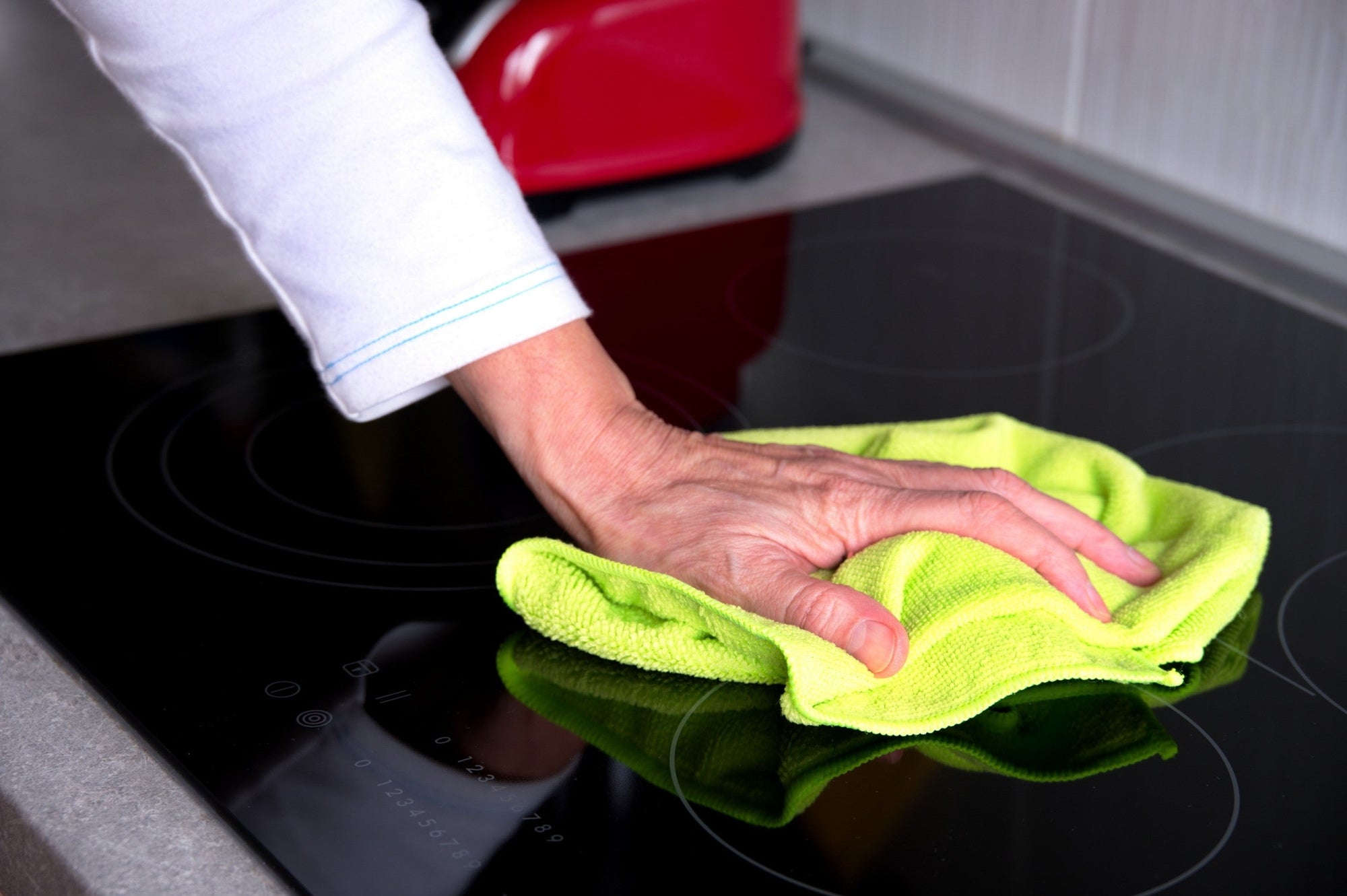
- Microfibre cloths: The only cloth that should touch a glass cooktop surface for regular cleaning, soft, non-abrasive, and highly effective at lifting grease and food residue without scratching
- Dedicated glass cooktop cleaner: Purpose-formulated glass cooktop cleaner products, available from appliance brands and kitchen stores, are specifically designed to clean, polish, and protect glass and ceramic cooktop surfaces without scratching. Brands such as Cif, Weiman, and Bar Keepers Friend offer widely available options in India
- Razor blade scraper: A single-edge razor blade held at a 30-degree angle to the surface, the only safe tool for removing hardened, baked-on food that resists chemical cleaning. Must be used with care and only on a wet surface
- Baking soda paste: A homemade glass cooktop cleaner made from baking soda and a few drops of dish soap, gentle, effective, and free from abrasive particles
- White vinegar: Diluted white vinegar in a spray bottle cuts through grease and water marks effectively on glass surfaces
What to Avoid
- Steel wool and abrasive scrubbing pads: The single most common cause of glass cooktop scratching in Indian kitchens, never use under any circumstances
- Harsh chemical cleaners: Bleach, acetone, ammonia-based cleaners, and oven cleaners contain chemicals that can permanently discolour or etch glass cooktop surfaces
- Abrasive cleaning powders: Products like Vim powder contain abrasive particles that cause micro-scratching on glass surfaces, use liquid dish soap instead
- Rough kitchen sponges: The scratchy side of a standard kitchen sponge is abrasive enough to damage a glass cooktop surface over time, use only the soft side or a microfibre cloth
- Coloured or dyed cloths: Some dyed cloths transfer colour onto glass cooktop surfaces, particularly when wet — use white or colour-stable microfibre cloths
How to Clean Glass Cooktop: Daily Cleaning Routine
The best way to clean glass cooktop surfaces for everyday maintenance is a simple, consistent routine that prevents food and grease from building up into the stubborn, baked-on deposits that require intensive cleaning.
Daily Cleaning Steps
Step 1: Allow the surface to cool completely
Never clean a hot glass cooktop, always wait until the surface has returned to room temperature before applying any cleaning product or cloth. Cleaning a hot surface causes thermal shock risk, bakes cleaning products onto the surface, and risks burns.
Step 2: Remove loose debris
Gently wipe away any loose food particles, crumbs, or dry residue with a dry microfibre cloth, removing dry debris before introducing moisture prevents scratching from particles trapped under the cleaning cloth.
Step 3: Apply a glass cooktop cleaner or damp cloth
For light daily cleaning, a microfibre cloth dampened with warm water and a drop of liquid dish soap is sufficient. For slightly more residue, spray a small amount of diluted white vinegar onto the surface before wiping.
Step 4: Wipe in straight lines
Wipe the surface in straight, consistent lines rather than circular motions, this reduces the risk of spreading food particles and causing micro-scratches from particles trapped under the cloth.
Step 5: Dry with a clean microfibre cloth
Always finish with a dry microfibre cloth, wiping away moisture prevents water marks and streaking on the glass surface. On black glass surfaces, water marks are particularly visible and require prompt drying to prevent them from becoming stubborn deposits.
How to Clean Glass Cooktop: Weekly Deep Clean
Even with a consistent daily routine, a weekly deep clean removes the grease film and light residue that accumulates over multiple cooking sessions.
Deep Cleaning Steps
Step 1: Apply baking soda paste
Mix three tablespoons of baking soda with enough liquid dish soap to form a spreadable paste, this is the most effective homemade glass cooktop cleaner for a weekly deep clean. Spread the paste generously across the entire glass cooktop surface.
Step 2: Cover with a warm damp cloth
Place a warm, damp microfibre cloth over the paste-covered surface and leave for 15–20 minutes. The warmth and moisture allow the baking soda paste to penetrate and loosen baked-on grease without requiring aggressive scrubbing.
Step 3: Wipe away the paste
Remove the cloth and wipe the paste away with clean sections of the microfibre cloth, you will see grease and food residue lifting away with the paste. Rinse the cloth frequently to avoid spreading the residue back onto the surface.
Step 4: Apply dedicated glass cooktop cleaner
After removing the baking soda paste, apply a small amount of dedicated glass cooktop cleaner cream to the surface and buff with a clean microfibre cloth, this step cleans any remaining residue and leaves a protective polish on the surface that helps repel future grease adhesion.
Step 5: Finish with white vinegar
Spray a light mist of diluted white vinegar onto the surface and wipe with a clean dry cloth, this removes any streaks or cleaning product residue and leaves the surface clear and streak-free.
When Is Glass Cooktop Replacement Necessary?
Glass cooktop replacement is a significant decision, and it is important to distinguish between cosmetic issues that do not require replacement and structural damage that does.
When Replacement Is Necessary
- Cracks: Any crack, even a hairline crack, in a glass cooktop surface is a safety issue. Cracks can propagate suddenly under thermal stress, creating a risk of sharp glass fragments and gas or electrical hazard depending on the cooktop type. Glass cooktop replacement is mandatory when cracking is present
- Chips and deep gouges: Chips in the glass surface, typically caused by impact from dropped cookware, compromise the structural integrity of the glass and require glass cooktop replacement
- Damage around burner openings: Cracks or chips around the openings where gas burners emerge are particularly serious, they compromise the seal between the glass and the burner mechanism
When Replacement Is Not Necessary
- Surface scratches: Fine surface scratches are cosmetic and do not compromise safety or function, glass cooktop replacement is not required, though the scratches are generally permanent
- Cloudiness or dullness: Surface cloudiness from accumulated micro-scratching is cosmetic, a polishing glass cooktop cleaner cream can improve the appearance but not fully restore the original clarity
- Water marks and residue: Persistent water marks and cleaning product residue are cosmetic and can be addressed with the cleaning methods described in this guide, glass cooktop replacement is not required
Maintaining a 2 Burner Cooktop Glass Surface
A 2-burner cooktop with a glass surface presents the same cleaning challenges as a larger glass cooktop, but with a smaller surface area that is often more intensively used relative to its size:
- The smaller surface area of a 2-burner cooktop means spills reach the edge of the glass faster and are more likely to overflow onto the surrounding countertop — wipe spills promptly to prevent overflow and edge staining
- Both burners are typically used simultaneously in a 2-burner cooktop, meaning the entire glass surface experiences heat stress during every cooking session. Allow adequate cooling time before cleaning
- The compact size of a 2-burner cooktop glass surface makes razor blade scraping easier and more controlled, there is less surface area to navigate and less risk of accidental contact with the edges
Köche Glass Cooktops: Engineered for Easy Cleaning
At Köche, our glass cooktop range is designed with cleanability as a core engineering priority, not an afterthought. Köche glass cooktop surfaces use premium toughened borosilicate glass with a micro-smooth finish that resists grease adhesion and makes daily cleaning faster and easier than standard glass surfaces.
Our 2-burner cooktop, 3-burner, and 4-burner glass cooktop models all feature spill-proof burner collars that contain overflows and prevent food from reaching the underside of the glass, one of the most practically useful design features for the reality of Indian cooking. Every Köche glass cooktop comes with a detailed cleaning guide and is compatible with leading glass cooktop cleaner products, so your cooktop stays looking its best from the first day of use to the last.
Conclusion
A glass cooktop that is cleaned correctly stays looking as refined and pristine as the day it was installed, and a glass cooktop that is cleaned incorrectly accumulates irreversible scratching that no amount of subsequent care can fully undo. The best way to clean glass cooktop surfaces is built on four principles: use the right tools (microfibre cloths and a dedicated glass cooktop cleaner), avoid the wrong ones (abrasive pads and harsh chemicals), clean promptly after cooking before spills harden, and allow the surface to cool completely before every cleaning session.
Apply these principles consistently, whether you have a compact 2 burner cooktop or a full 4-burner hob, and your glass surface will reward you with years of pristine, scratch-free performance.
FAQs
What is the best way to clean a glass cooktop without scratching it?
The best way to clean glass cooktop surfaces without scratching is to use a soft microfibre cloth with a dedicated glass cooktop cleaner cream or a baking soda and dish soap paste. Always allow the surface to cool completely before cleaning, wipe with light pressure in straight lines, and never use abrasive pads, steel wool, or harsh chemical cleaners that cause irreversible surface scratching.
Can I use vinegar to clean my glass cooktop?
Yes, diluted white vinegar is one of the safest and most effective homemade glass cooktop cleaner options for cutting through grease and removing water marks. Mix equal parts white vinegar and water in a spray bottle, spray onto the cooled surface, wipe with a microfibre cloth, and dry immediately with a clean cloth to prevent streaking.
How do I remove baked-on food from a glass cooktop?
The safest method for removing stubborn baked-on food from a glass cooktop is the razor blade scraper technique, holding a single-edge blade at a 30-degree angle on a wet surface and pushing gently under the deposit. For lighter deposits, placing a hot damp cloth over the area for 20–30 minutes softens the food sufficiently for cloth removal. Always follow up with glass cooktop cleaner cream to remove residue.
What is the difference between ceramic and glass cooktop cleaning?
The ceramic vs glass cooktop cleaning difference is minimal in practice. Both surfaces are smooth, flat, non-porous, and scratch-sensitive, requiring microfibre cloths, dedicated glass cooktop cleaner products, and the avoidance of abrasive scrubbers. Ceramic-glass composite surfaces are marginally more resistant to thermal shock than pure glass, but the cleaning approach and the products to use and avoid are essentially identical for both.
When does a glass cooktop need replacement?
Glass cooktop replacement is necessary when the surface develops cracks, chips, or structural damage, these are safety issues that require immediate attention regardless of how minor they appear. Surface scratches and cloudiness are cosmetic issues that do not require glass cooktop replacement, though they are generally permanent. A polishing glass cooktop cleaner can improve scratched surface appearance but cannot fully restore original clarity.
Can I use Vim powder or abrasive cleaning powder on my glass cooktop?
No, abrasive cleaning powders including Vim powder contain fine abrasive particles that cause micro-scratching on glass cooktop surfaces. Even a single cleaning with abrasive powder can leave visible scratches on a black glass surface. Use only liquid dish soap, dedicated glass cooktop cleaner cream, or a baking soda paste — never powder-based abrasive cleaners on any glass or ceramic cooktop surface.
References
- Bureau of Indian Standards (BIS) — IS 4246: Domestic Gas Cooking Appliances Safety Requirements: www.bis.gov.in
- Bureau of Energy Efficiency (BEE), Government of India — Kitchen Appliance Care and Maintenance Guidelines: www.beeindia.gov.in
- Consumer Affairs Department, Government of India — Kitchen Appliance Safety and Maintenance for Indian Households: www.consumeraffairs.nic.in
- Indian Institute of Interior Designers (IIID) — Kitchen Surface Care and Maintenance Standards: www.iiid.in
Share:
60 cm vs 90 cm Chimney: Which Size Is Ideal for Your Kitchen?
How to Choose Energy-Efficient Kitchen Appliances for Home?