
Summary:
Every kitchen runs on its appliances, and in Indian homes where kitchens are used intensively across multiple meals every day, the energy efficiency, quality, and suitability of those appliances directly impact monthly running costs, cooking performance, and long-term kitchen satisfaction. This kitchen appliances buying guide covers what are kitchen appliances, how to choose kitchen appliances for energy efficiency, the must have kitchen appliances for every Indian home, and where smart kitchen appliances are transforming modern cooking, helping you make every appliance decision with confidence and clarity.
Key Takeaways
- What are kitchen appliances — any electrical or gas-powered device used to prepare, cook, store, or clean food; choosing them correctly is one of the most consequential decisions in any kitchen setup
- How to choose kitchen appliances for energy efficiency requires checking BEE star ratings, comparing power consumption specifications, and prioritising quality over upfront price savings
- Must have kitchen appliances for Indian homes include a chimney, cooktop or hob, refrigerator, mixer-grinder, and microwave — each contributing to a functional, efficient daily kitchen
- Smart kitchen appliances with sensor-based controls, auto-shutoff, and energy monitoring are increasingly available in India and deliver measurable long-term savings in electricity consumption
- Kitchen hobs and gas cooktops with BLDC motors and auto-clean features represent some of the most significant energy and maintenance efficiency gains available in modern Indian kitchen appliances
- Useful kitchen appliances earn their place by being used daily — prioritise frequency of use and genuine functional need over novelty when building your kitchen appliance list
- How to clean kitchen appliances correctly and regularly directly extends their operational lifespan — maintenance is as important as the initial purchase decision
- Where to buy cheap kitchen appliances should never mean compromising on BIS certification, BEE star rating, or after-sales service availability — value and cheapness are not the same thing
Introduction
The modern Indian kitchen has never had more appliance choices, or more variables to navigate. From entry-level gas stoves to premium smart kitchen appliances with Wi-Fi connectivity and voice control, the range available to Indian homeowners spans an enormous spectrum of price, quality, and capability. Yet most households make appliance decisions reactively, replacing what breaks, buying what is on sale, or choosing what a friend or family member recommended, rather than approaching the kitchen as an integrated system where each appliance choice affects the others.
Energy efficiency is the lens through which every appliance decision benefits from being made. An energy-efficient kitchen is not just an environmentally responsible one, it is a cheaper one to run, a longer-lasting one to maintain, and a better-performing one to cook in every day.
What Are Kitchen Appliances?
What are kitchen appliances in their full scope? They are any powered device, gas, electric, or induction, used in the kitchen for food preparation, cooking, preservation, or cleaning. They fall into three broad categories:
1. Major Kitchen Appliances
Large, typically fixed appliances that form the structural infrastructure of the kitchen:
- Kitchen hobs and gas cooktops: The primary cooking surface, available in gas, electric, and induction variants; the most intensively used appliance in any Indian kitchen
- Kitchen chimney: Ventilation and grease extraction, essential for Indian cooking conditions
- Refrigerator: Food storage and preservation, typically the highest energy-consuming appliance in the home
- Dishwasher: Increasingly common in urban Indian homes, can be more water and energy-efficient than hand washing when used with full loads
2. Small Kitchen Appliances
Countertop appliances that are used regularly but not permanently fixed:
- Mixer-grinder: the single most essential small appliance in Indian cooking
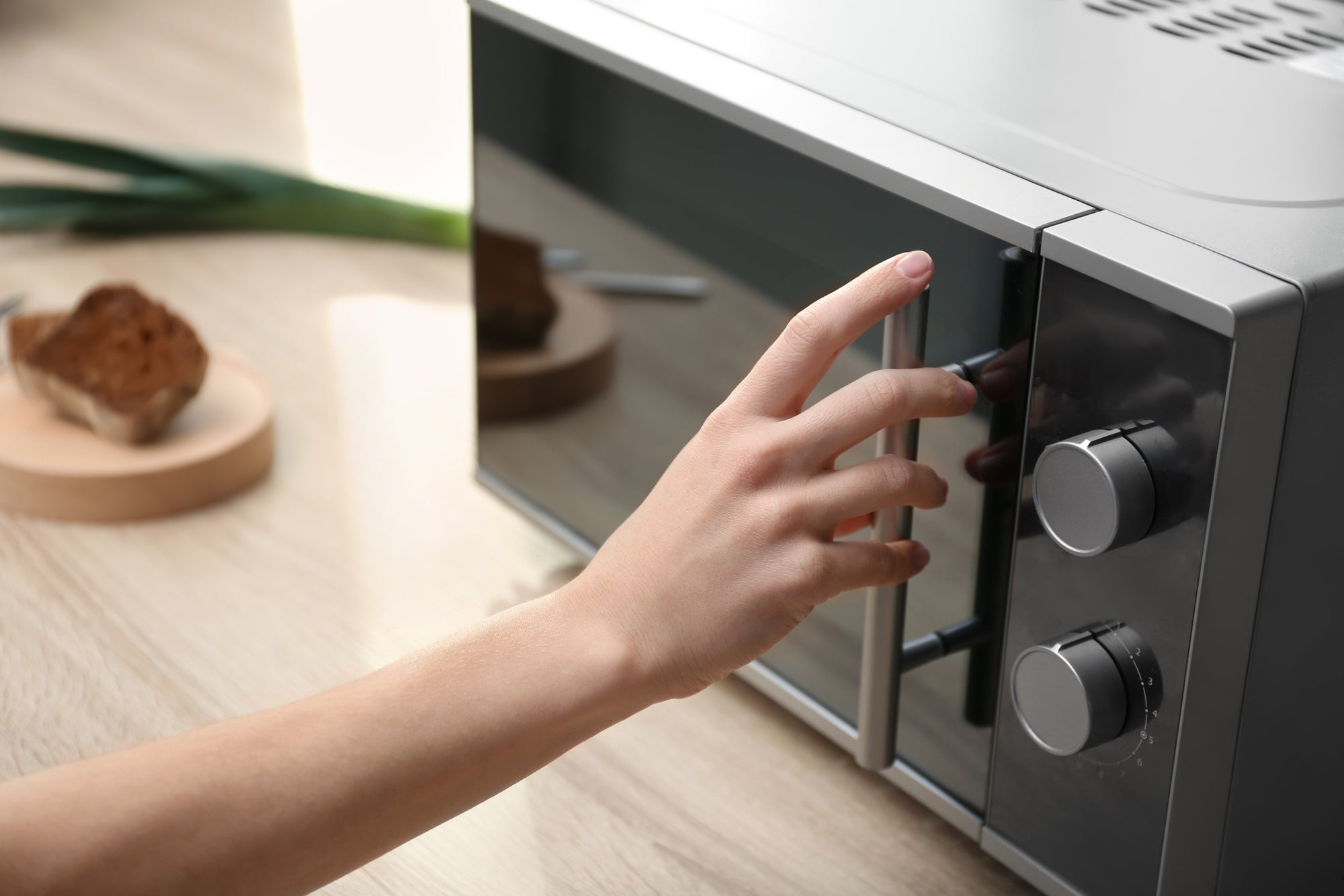
- Microwave oven: reheating, defrosting, and supplementary cooking
- Electric kettle: fast, energy-efficient water boiling
- Toaster and sandwich maker: breakfast and snacking applications
- Air fryer: growing rapidly in Indian urban kitchens as a healthier cooking alternative
3. Smart Kitchen Appliances
Smart kitchen appliances are a rapidly growing category, featuring Wi-Fi or Bluetooth connectivity, app-based control, sensor-driven automation, and energy monitoring:
- Smart refrigerators with internal cameras and inventory tracking
- App-controlled microwave ovens with recipe integration
- Smart chimneys with auto-sensing suction adjustment based on cooking intensity
- Induction cooktops with precise temperature control and auto-shutoff
How to Choose Kitchen Appliances: The Energy Efficiency Framework
How to choose kitchen appliances for genuine energy efficiency requires a structured approach, not just looking for the lowest price or the most features.
Step 1: Check the BEE Star Rating
The Bureau of Energy Efficiency (BEE) star rating system is India's official benchmark for appliance energy efficiency, and the single most reliable guide for energy-conscious appliance buying:
- Ratings run from 1 star (least efficient) to 5 stars (most efficient)
- A 5-star refrigerator consumes up to 25–30% less electricity than a 1-star model of equivalent capacity
- BEE star ratings are mandatory for refrigerators, air conditioners, washing machines, and ceiling fans, and increasingly available for gas cooktops and kitchen hobs
- Always compare star ratings within the same appliance category and capacity, a 5-star 180-litre refrigerator is not directly comparable to a 3-star 300-litre model
Step 2: Calculate the True Cost of Ownership
The purchase price of a kitchen appliance is only one component of its total cost, running costs over a 5–10 year lifespan often dwarf the initial investment:
- A refrigerator running 24 hours a day for 10 years accumulates thousands of operational hours, a 5-star model's efficiency premium pays back within 2–3 years in electricity savings
- Kitchen hobs and gas cooktops with BLDC motors consume significantly less energy per cooking session than conventional motor equivalents, the cumulative saving across years of daily use is substantial
- Factor in maintenance costs, lower-quality appliances require more frequent servicing and have higher spare part costs that erode any initial price savings quickly
Step 3: Prioritize Must-Have Kitchen Appliances First
Must have kitchen appliances earn their classification by being used daily, they should receive the majority of the appliance budget and the most careful quality evaluation:
- Gas cooktop or kitchen hob: Used multiple times daily, invest in quality burners, toughened glass surfaces, and BLDC motor technology for chimneys
- Kitchen chimney: Essential for Indian cooking, choose auto-clean models with BLDC motors for lower energy use and reduced maintenance frequency
- Refrigerator: The highest energy consumer in most Indian homes, always buy the highest BEE star rating your budget allows
- Mixer-grinder: Used daily in most Indian kitchens, motor quality and wattage directly determine performance longevity
Step 4: Evaluate Smart Kitchen Appliances Selectively
Smart kitchen appliances offer genuine efficiency benefits in some categories and marketing-driven complexity in others, evaluate each on its specific merits:
- Worth it: Smart chimneys with auto-sensing suction (adjust automatically to cooking intensity, saving energy); induction cooktops with precise temperature control (prevent energy waste from overheating); smart inverter refrigerators (adjust compressor speed based on load)
- Evaluate carefully: App-controlled microwaves and Wi-Fi kettles, the smart features add cost without always adding meaningful efficiency or convenience benefit for most Indian households
Step 5: Consider Where to Buy Kitchen Appliances
Where to buy kitchen appliances is a frequently searched question, and the answer requires distinguishing between genuine value and false economy:
- Authorised brand showrooms should be considered as they offer warranty protection, genuine products, and after-sales service, worth the slight premium over grey market or unverified sellers
- Festival sale periods, Diwali, Big Billion Days, and Republic Day sales, offer genuine discounts of 15–30% on major kitchen appliances from authorised sellers
- Never compromise on BIS certification for gas appliances — uncertified gas cooktops and kitchen hobs carry genuine safety risks that no price saving justifies
Kitchen Hobs and Gas Cooktops: The Energy Efficiency Priority
Kitchen hobs and gas cooktops deserve special attention in any kitchen appliances buying guide, as the most intensively used cooking appliances in Indian homes, their efficiency and quality directly impact both daily cooking performance and long-term running costs.
Choosing an Energy-Efficient Kitchen Hob or Gas Cooktop
- BLDC motor chimneys paired with hobs: The chimney that extracts cooking fumes from above your kitchen hob or gas cooktop is a major energy consumer, always pair your cooking surface with a BLDC motor chimney for maximum system efficiency
- Brass vs aluminium burners: Brass burners on gas cooktops and kitchen hobs distribute heat more evenly and retain heat more efficiently than aluminium, reducing the gas consumed per cooking session over time
- Auto-ignition: Auto-ignition gas cooktops eliminate the gas wasted during manual lighting attempts, a small per-session saving that accumulates meaningfully across years of daily use
- Flame failure device (FFD): An FFD cuts gas supply automatically if the flame is accidentally extinguished, preventing gas waste and carrying significant safety benefits
- Burner configuration: Choose the number of burners based on genuine cooking need, a gas cooktop with more burners than you regularly use simultaneously wastes counter space without delivering efficiency benefit
Useful Kitchen Appliances: Getting the Priority Right
The most useful kitchen appliances are those used daily, and identifying genuine daily-use appliances before less essential ones ensures your budget delivers maximum return:
- Daily use: Gas cooktop or kitchen hob, chimney, refrigerator, mixer-grinder, these form the non-negotiable functional core of any Indian kitchen
- Regular use: Microwave, electric kettle, toaster, used frequently enough to justify dedicated counter space
- Occasional use: Air fryer, sandwich maker, hand blender, valuable when used but should not displace daily-use appliances in budget priority
- Evaluate carefully: Bread makers, egg boilers, and electric choppers, useful for specific households but unnecessary for many; assess honestly against your actual cooking patterns before purchasing
Koche: Energy-Efficient Kitchen Hobs and Cooktops for Indian Homes
At Koche, we design kitchen hobs and gas cooktops that are engineered from the ground up for the energy demands, cooking intensity, and aesthetic standards of the modern Indian kitchen. Our range combines precision brass burners for maximum combustion efficiency, toughened glass surfaces for durability and easy cleaning, BLDC motor chimneys with auto-clean technology for lowest energy consumption, and auto-ignition systems with flame failure devices for safety and gas efficiency.
Every Koche appliance is BIS-certified and designed to deliver years of reliable, efficient, and low-maintenance performance, because in a kitchen used as intensively as an Indian one, the quality of your appliances is the quality of your cooking experience, every single day.
Also Read: Which Type of Cooktop Is Most Energy-Efficient for Home Use?
Conclusion
Choosing energy-efficient kitchen appliances is not a single decision but a series of informed choices, each guided by genuine daily use needs, BEE star ratings, total cost of ownership, and the quality standards that determine how long an appliance performs at its best. Prioritise your must have kitchen appliances first, invest in the highest BEE star rating your budget allows, pair quality kitchen hobs and gas cooktops with BLDC motor chimneys for maximum system efficiency, and maintain every appliance correctly with the right how to clean kitchen appliances routine. Do this, and your kitchen will reward you with years of efficient, enjoyable, and cost-effective cooking.
FAQs
What are kitchen appliances and which ones are essential for Indian homes?
What are kitchen appliances, they are powered devices used for cooking, food preparation, preservation, and cleaning in the kitchen. The must have kitchen appliances for Indian homes are a gas cooktop or kitchen hob, a chimney, a refrigerator, and a mixer-grinder, these four form the functional foundation of any Indian kitchen and should receive priority in both budget allocation and quality selection.
How do I choose kitchen appliances for energy efficiency?
How to choose kitchen appliances for energy efficiency — check the BEE star rating (always aim for 4 or 5 stars), calculate total cost of ownership including running costs, prioritise appliances with inverter technology and BLDC motors, and choose smart kitchen appliances selectively where the technology delivers genuine efficiency benefits rather than complexity for its own sake.
Are smart kitchen appliances worth buying in India?
Smart kitchen appliances are worth buying when the smart features deliver genuine efficiency or convenience benefits — such as auto-sensing chimneys, inverter refrigerators, and precise induction gas cooktops. Features like app-controlled kettles or Wi-Fi microwaves add cost without meaningful benefit for most Indian households. Evaluate each smart kitchen appliance on specific functional merits rather than technology novelty.
Where can I buy cheap kitchen appliances without compromising quality?
Where to buy cheap kitchen appliances without compromising quality, shop during major Indian festival sales (Diwali, Big Billion Days) for genuine discounts of 15–30% from authorised sellers. Always buy from established online retailers or brand showrooms that provide warranty support and after-sales service. Never compromise on BIS certification for gas cooktops and kitchen hobs, safety cannot be traded for price savings.
How do I clean kitchen appliances to extend their lifespan?
How to clean kitchen appliances for maximum lifespan — wipe kitchen hobs and gas cooktops after every use with a microfibre cloth; clean chimney filters every 2–4 weeks; defrost and clean refrigerator condenser coils every 6 months; clean mixer-grinder immediately after use. Regular, correct cleaning prevents performance degradation, reduces energy consumption, and significantly extends every appliance's operational life.
What is the difference between kitchen hobs and gas cooktops?
Kitchen hobs are built-in appliances installed flush into a kitchen countertop — creating a seamless, integrated appearance suited to modular kitchens. Gas cooktops is a broader term that includes both built-in hobs and freestanding stove-top gas cooking surfaces. In common Indian usage, kitchen hobs typically refers to the built-in integrated version while gas cooktops may refer to either — the key difference is installation method and kitchen integration level.
Share:
How to Clean a Glass Cooktop Without Scratches?
How Does an Auto Clean Kitchen Chimney Work?