
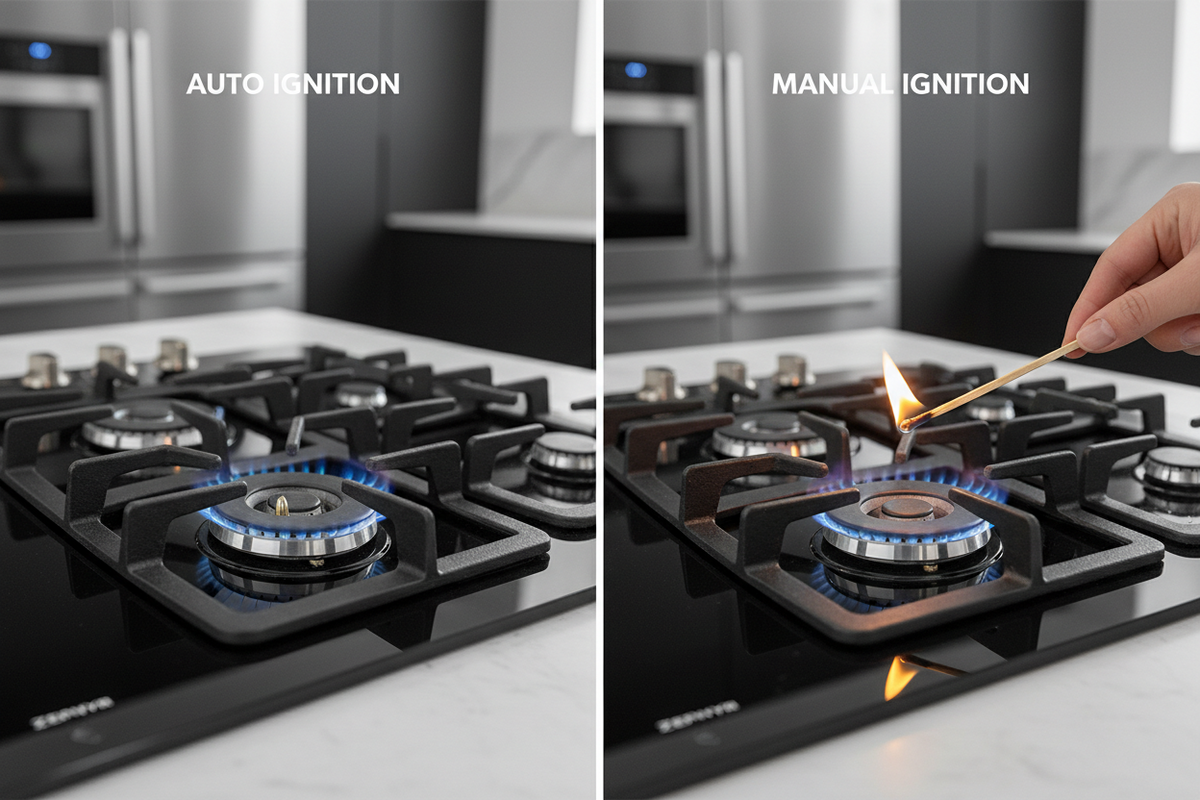
Auto ignition gas stoves light the burner with a built-in spark when you turn the knob, while manual ignition stoves require a matchstick or lighter. Auto ignition is more convenient and easier to use, while manual ignition is simpler and usually costs less. The better choice depends on your cooking habits, budget and preferred maintenance.
What is the difference between auto ignition and manual ignition?
Auto ignition gas stoves light the burner using a built-in spark when you turn the knob, while manual ignition stoves require a lighter or matchstick. Auto ignition offers greater convenience, while manual ignition has a simpler mechanism and usually costs less.

What Is an Auto Ignition Gas Stove?
An auto ignition gas stove lights the burner using a built-in ignition system when you turn the knob. This means you don't need to use a matchstick or lighter separately.
Depending on the model, the spark can be generated using a piezoelectric mechanism, a battery-powered system or mains electricity.
How does an auto ignition gas stove work?
When you turn the knob, gas starts flowing and the ignition mechanism produces a spark to light the burner. The process happens almost immediately, allowing you to light the burner with one hand.
Piezoelectric Ignition
Piezoelectric ignition uses a mechanical mechanism to generate a spark when the ignition is activated. It does not depend on household electricity or a battery.
Battery Ignition
Battery-powered ignition uses a battery to generate the spark. The battery will eventually need replacement, with battery life depending on the model and frequency of use.
Mains-Powered Ignition
Mains-powered ignition uses your home's electricity supply to generate the spark. These systems may require an alternative lighting method during a power cut.
What Is Manual Ignition?
A manual ignition gas stove is the traditional type of gas stove. You turn the gas knob and use a lit matchstick or lighter to ignite the burner.
Because there is no built-in electronic ignition mechanism, manual ignition stoves have a simpler design and are usually more affordable.
Is manual ignition still a good option?
Yes. Manual ignition can be a practical choice if you prefer a simple mechanism, want to spend less upfront or don't mind using a lighter or matchstick when cooking.
Is manual ignition still a good option?
Yes. Manual ignition can be a practical choice if you prefer a simple mechanism, want a lower upfront cost or do not mind using a lighter or matchstick when cooking.
Köche also offers manual ignition cooktops for customers who prefer this simpler setup.
Safety: Auto Ignition vs Manual Ignition
Both ignition types can be safe when the appliance is properly installed and used correctly. The main difference is how the flame is started.
Auto Ignition
The spark is generated as the gas is released, reducing the time between turning on the gas and lighting the burner.
Manual Ignition
The user needs to light the burner separately after turning the gas knob, so the flame should be lit promptly and carefully.
When auto ignition is paired with a Flame Failure Device (FFD), the appliance can automatically stop the gas supply if the flame goes out unexpectedly, depending on the model.
If your kitchen involves regular frying or tadka, pairing either type of stove with a good kitchen chimney can also help reduce smoke and grease around the cooking area.

Auto Ignition vs Manual Ignition: Main Differences
If you're comparing an auto ignition vs manual ignition gas stove, the biggest differences are convenience, upfront cost, maintenance and how the burner is lit.
| Factor | Auto Ignition | Manual Ignition |
|---|---|---|
| How it lights | Turn the knob and the built-in ignition produces a spark. | Turn the knob and light the burner with a matchstick or lighter. |
| Hands needed | One hand | Usually two hands |
| Upfront price | Usually higher | Usually lower |
| Power cut | Depends on the ignition system | Works without electricity |
| Safety | Convenient ignition; FFD may be available depending on model | Requires manual lighting |
| Ease of use | Very convenient for everyday cooking | Simple, but requires a lighter or matchstick |
| Maintenance | Battery or ignition mechanism may need occasional attention | Fewer ignition components to maintain |
Why Households Choose Auto Ignition
Quick Everyday Lighting
Turn the knob and ignite the burner without reaching for a lighter or matchstick.
Convenient One-Handed Operation
Auto ignition is particularly convenient when you're already handling cookware or ingredients.
Easy For Different Age Groups
A simple turn of the knob can be easier than handling a lighter or matchstick.
Less Clutter Around The Stove
Since you don't need to keep a lighter or matchbox beside the stove for every use, the cooking area can stay more organised.
Köche's Betty Auto Ignition Hobs and Ivan Auto Ignition Hobtops combine battery-powered auto ignition with brass burners and multi-pin flame systems.
Why Manual Ignition Still Makes Sense
Lower Upfront Cost
Manual ignition models are generally more affordable because they do not include a built-in ignition system.
Simple Mechanism
There is no battery-powered ignition system to replace or maintain.
Independent Of Electricity
A manual stove can be lit with a suitable lighter or matchstick even during a power cut.
Practical For Budget-Conscious Kitchens
It can be a sensible choice for rental homes, secondary kitchens or buyers prioritising a lower initial price.
Köche also offers several durable manual ignition cooktops .
What Happens During a Power Cut?
Whether auto ignition works during a power cut depends on the type of ignition system used in the stove.
Does not rely on household electricity and can continue to generate a spark.
Can continue working during a power cut as long as the battery has sufficient charge.
Requires electricity to generate the spark, so a backup lighting method may be needed during a power cut.
Does not depend on electricity because the burner is lit separately.
Does auto ignition work during a power cut?
Battery-powered and piezoelectric ignition systems can work during a power cut. Mains-powered ignition requires electricity, while manual ignition does not depend on electricity.

See the Price Difference: Same Cooktop, Two Ignition Types
The Köche Flamaro range makes the comparison easier because the same cooktop is available with both manual and auto ignition. Prices below are pulled directly from the current Köche product pages, so they update automatically when the product price is changed in Shopify.
Current difference between the manual and auto ignition versions.
| Model | Manual Ignition | Auto Ignition | Price Difference |
|---|---|---|---|
| Flamaro 3 Burner | ₹17,990 | ₹19,990 | ₹2,000 |
| Flamaro 4 Burner | ₹11,490 | ₹12,990 | ₹1,500 |
Flamaro 3 Burner: ₹17,990 manual vs ₹19,990 auto. Flamaro 4 Burner: ₹11,490 manual vs ₹12,990 auto.
Is auto ignition worth the extra cost?
It can be worth the extra cost if you value quick, one-handed lighting and everyday convenience. Manual ignition can be a better fit if you prefer a simpler setup and lower upfront cost.
Which One Should You Choose?
You want convenience every day.
- You want quick, one-handed lighting.
- You prefer not to use a lighter or matchstick every time.
- Ease of use is more important than saving on the initial purchase.
- You are comfortable with occasional battery or ignition maintenance.
You prefer simplicity and a lower upfront cost.
- Budget is the deciding factor.
- You prefer a simpler ignition system.
- You don't mind using a lighter or matchstick.
- You want a stove that does not depend on an ignition battery.
Auto ignition is the better choice if convenience and ease of use are your priorities. Manual ignition is a practical choice if you want a simpler setup and lower upfront cost. Neither is automatically better for every household.
Beyond Ignition: What Else to Check Before Buying
Burner Count
Two-burner cooktops can work well for compact kitchens, rentals and smaller households. Three- and four-burner models offer more flexibility when preparing multiple dishes at the same time.
Build Material
Toughened glass tops offer a sleek appearance and are easy to wipe clean. Stainless steel and matte-finish surfaces can also be practical choices for everyday use.
Burner Quality
Brass burners are commonly chosen for their durability and heat distribution. For Indian cooking, look for burners designed to provide a stable and consistent flame.
Köche's Nova Hobtops come in 3B and 4B configurations with a 360° revolving gas nozzle and auto ignition.
For more information, see the Köche Complete Gas Stove Guide .
Installation & Service Support
Köche provides installation and service support for its kitchen appliances. Customers in Bangalore and Hyderabad can also access Köche's local store and service support, making after-sales assistance easier to access.
What Köche Customers Say About Auto Ignition Gas Stoves
"The multi-pin flame provides a consistent heat output, and the auto-ignition feature works flawlessly. The toughened glass is durable... the brass burners are very effective for cooking."
— Chitaranjan Sahoo, Ivan 3B Auto Ignition Hobtop
"Auto ignition is quick, burners are powerful, and cleaning is hassle-free. Great choice for family cooking."
— Ankita, Ivan 4B Auto Ignition Hobtop
Final Word
Auto ignition and manual ignition gas stoves are both practical options. Auto ignition offers greater convenience and easier everyday lighting, while manual ignition keeps the mechanism simple and the initial cost lower.
If convenience and ease of use matter most to you, the extra cost of auto ignition may be worthwhile. If you prefer simplicity and want to keep your initial spending lower, manual ignition remains a sensible choice.
Choose the ignition system that suits your kitchen.
Frequently Asked Questions
Is auto ignition better than manual ignition?
Auto ignition is more convenient because the burner can be lit by turning the knob, while manual ignition requires a lighter or matchstick. Manual ignition is simpler and usually costs less. The better choice depends on your cooking habits and budget.
Is an auto ignition gas stove worth the extra cost?
It can be worth the extra cost if you value quick, one-handed lighting and everyday convenience. If keeping the initial purchase price low is more important, manual ignition may be the better fit.
Does auto ignition work during a power cut?
Battery-powered and piezoelectric ignition systems can work during a power cut. Mains-powered ignition requires electricity, while manual ignition does not depend on electricity.
How long does the battery last in an auto ignition stove?
Battery life varies by model and frequency of use. A weak or delayed spark can indicate that the battery needs attention. Follow the product manual for the recommended battery type and replacement procedure.
Are auto ignition gas stoves safe?
Auto ignition provides convenient burner lighting without a separate lighter or matchstick. Some models also include a Flame Failure Device that can stop the gas supply if the flame goes out unexpectedly. Safety features vary by model.
Can a manual gas stove be converted to auto ignition?
Aftermarket conversion is generally not recommended. A stove designed with auto ignition from the factory is better suited to its ignition system and related safety features.
Which lasts longer: auto or manual ignition?
Manual stoves have fewer ignition components, making the mechanism simpler. A well-built auto ignition stove can also provide long-term use when its ignition system is maintained properly.
Share:
10 Smart Tips to Reduce LPG Consumption During Gas Shortage in India
Kitchen Chimney Replacement Guide: 5 Signs You Shouldn't Ignore