
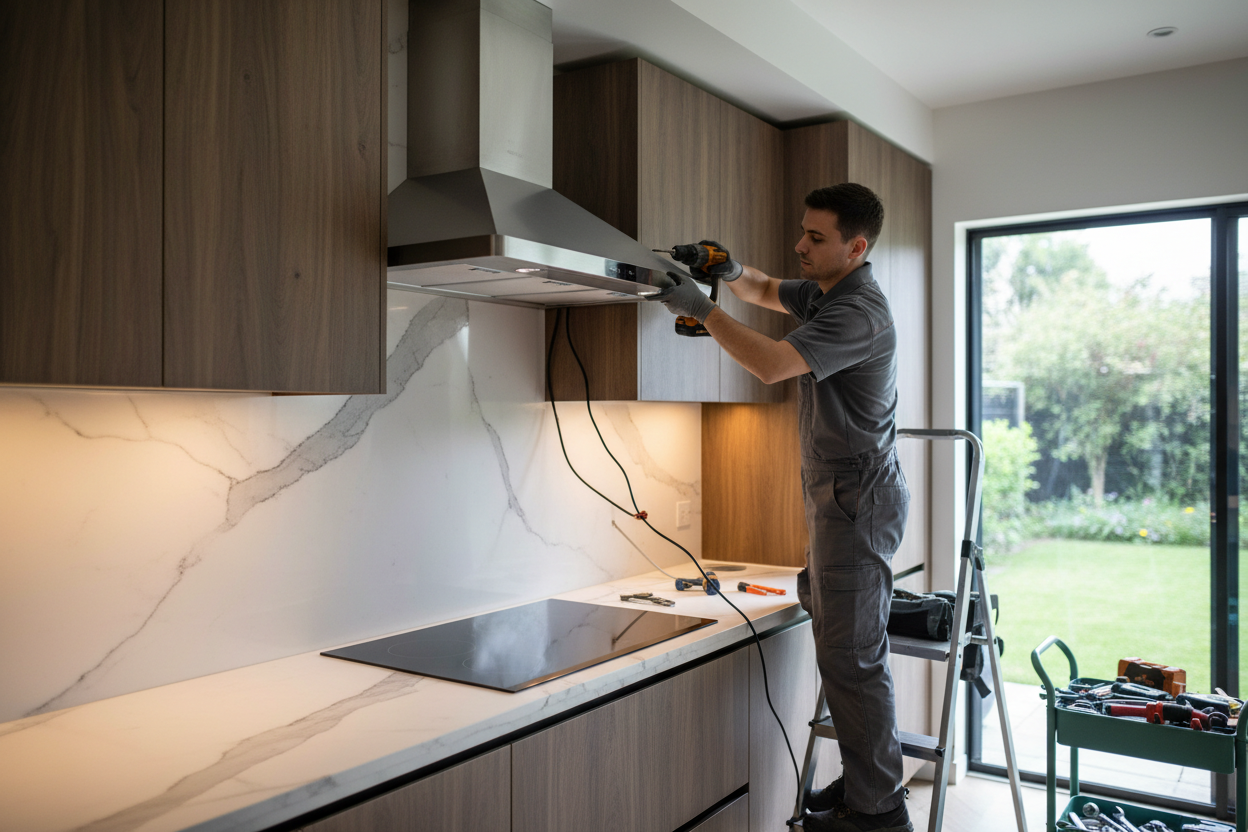
Your kitchen chimney works quietly in the background every time you cook, pulling out smoke, oil vapours, and heat so your kitchen stays clean and breathable. But like every appliance, it doesn't last forever. Knowing when to replace your kitchen chimney can save you from poor air quality, higher electricity bills, and even fire hazards caused by grease build-up.
If you've been wondering how long a kitchen chimney really lasts, or whether that odd noise and weak suction means it's time for an upgrade, this guide breaks down the five clearest warning signs plus what to look for in a replacement.
How Long Does a Kitchen Chimney Last?
On average, a good-quality kitchen chimney lasts 8 to 10 years with regular maintenance. This lifespan depends heavily on usage frequency, cooking style (especially oil-heavy or Indian cooking), motor quality, and how often filters are cleaned. A chimney used daily in a busy household will naturally wear out faster than one used occasionally.
Modern modular kitchen chimneys with BLDC motors tend to outlast older AC motor models, running quieter and more efficiently for longer but even these need replacing eventually.
5 Signs It's Time to Replace Your Kitchen Chimney
1. Weak or Inconsistent Suction
If your chimney used to clear smoke in seconds but now leaves your kitchen hazy even on high speed, the motor is likely losing power. If cleaning and filter replacement haven't helped, weak suction is one of the strongest signs your chimney has reached the end of its useful life and needs replacement.
2. Unusual Noise or Vibration
A healthy chimney should run smoothly with minimal noise. Grinding, rattling, or excessive vibration usually points to worn-out motor bearings or an imbalanced fan. It is often more cost-effective to replace than repair, especially in older AC motor chimneys.
3. Persistent Grease Build-Up and Odour
If your kitchen still smells of yesterday's cooking, or grease keeps accumulating on cabinets despite regular cleaning, your chimney is no longer extracting air and grease effectively. This may point to replacement.
4. Rising Electricity Bills Without Increased Usage
Older motors work harder to deliver the same suction power, consuming more electricity over time. Newer BLDC chimneys solve this, using significantly less power for the same or better performance.
5. Frequent Repairs or an Ageing Unit (8+ Years)
If you're calling a technician every few months, or your chimney has crossed the 8-10 year mark, repair costs eventually outweigh the value of the appliance. At this point, kitchen chimney replacement is about safety as much as performance.
What to Look for in a Replacement Chimney
When you're ready to upgrade, don't just replace like-for-like. A few years of technology can make a real difference:
-
BLDC motor technology — quieter, more energy-efficient, and longer-lasting than traditional AC motors
-
Higher suction power (m³/hr) suited to your cooking style and kitchen size
-
Auto-clean function to reduce manual maintenance by cleaning the chimney motor housing from the inside.
-
Filterless or baffle filter design for better long-term grease handling
-
The right size (60cm, 75cm, or 90cm) based on your cooktop width and kitchen layout
Explore Köche's BLDC Chimney Range
If any of these signs sound familiar, it's a good time to explore modern, energy-efficient options. Köche's BLDC chimneys are built for Indian kitchens, offering powerful suction, whisper-quiet operation, and low power consumption.
FAQs on Kitchen Chimney Replacement
How often should a kitchen chimney be serviced?
Ideally, filters should be cleaned every 15-20 days and a professional deep-clean or servicing done every 3-4 months, depending on how frequently you cook and how oil-heavy your cooking style is.
Can a kitchen chimney be repaired instead of replaced?
Minor issues like a clogged filter, faulty switch, or loose duct connection can usually be repaired. But motor failure, persistent weak suction after servicing, or a unit older than 8-10 years is usually more economical to replace than repair.
What is the ideal suction power for a kitchen chimney?
For most Indian kitchens, a suction power above 1200 m³/hr is recommended, going higher for larger kitchens or heavy, oil-based cooking.
Are BLDC chimneys better than regular AC motor chimneys?
Yes. BLDC motor chimneys consume less electricity, run quieter, generate less heat, and generally last longer than traditional AC motor chimneys, making them a better long-term investment. Köche BLDC Chimneys deliver up to 40% greater energy efficiency, operate up to 40% quieter, and feature a motor that lasts up to 2x longer than conventional AC motors.
What size chimney do I need for my kitchen?
As a rule of thumb, your chimney should be the same width as your cooktop or slightly wider to ensure it captures smoke and vapours effectively.
60 cm: Ideal for 2 burner cooktops
75 cm: Ideal for 3 burner cooktops
90 cm: Ideal for 4 burner cooktops
Does chimney size affect how long it lasts?
Not directly, but an undersized chimney has to work harder to extract smoke from a larger cooktop, which can strain the motor and shorten its lifespan faster than a correctly sized unit.
Share:
Auto Ignition vs Manual Ignition Gas Stove: Which One Should You Buy?
Electric Chimney: The Smart Solution for Modern Cooking